Bloglovin' Facebook Pinterest E-Mail Instagram Shop Home About Us Freebies Shop Image Map
Showing posts with label end of school. Show all posts

Sunday, April 23, 2017

Five Ways to Create a Strong Finish for the School Year

As the school year draws to a close, we’re all looking for fun ways to keep our middle school students engaged and learning– right up to the last day!


The Middle School Mob has come up with a list of five activities that are sure to help you make the most of these last weeks…and keep you sane at the same time! 

1.  Sharon from Classroom in the Middle uses Summer Practice Cards.  Summer Practice Task Cards are designed to provide a review of language arts skills for middle schoolers or students in upper elementary grades. The 30 half-page cards include five each on six summer topics: At the Beach, Life on the Pond, Low-Tech Fun, The Ball Game, Picnic Time, and Vacation and are perfect to use with a fun classroom game or activity. A coloring page cover and a checklist of assignments completed are also included so that the cards can be sent home for a summer practice booklet.


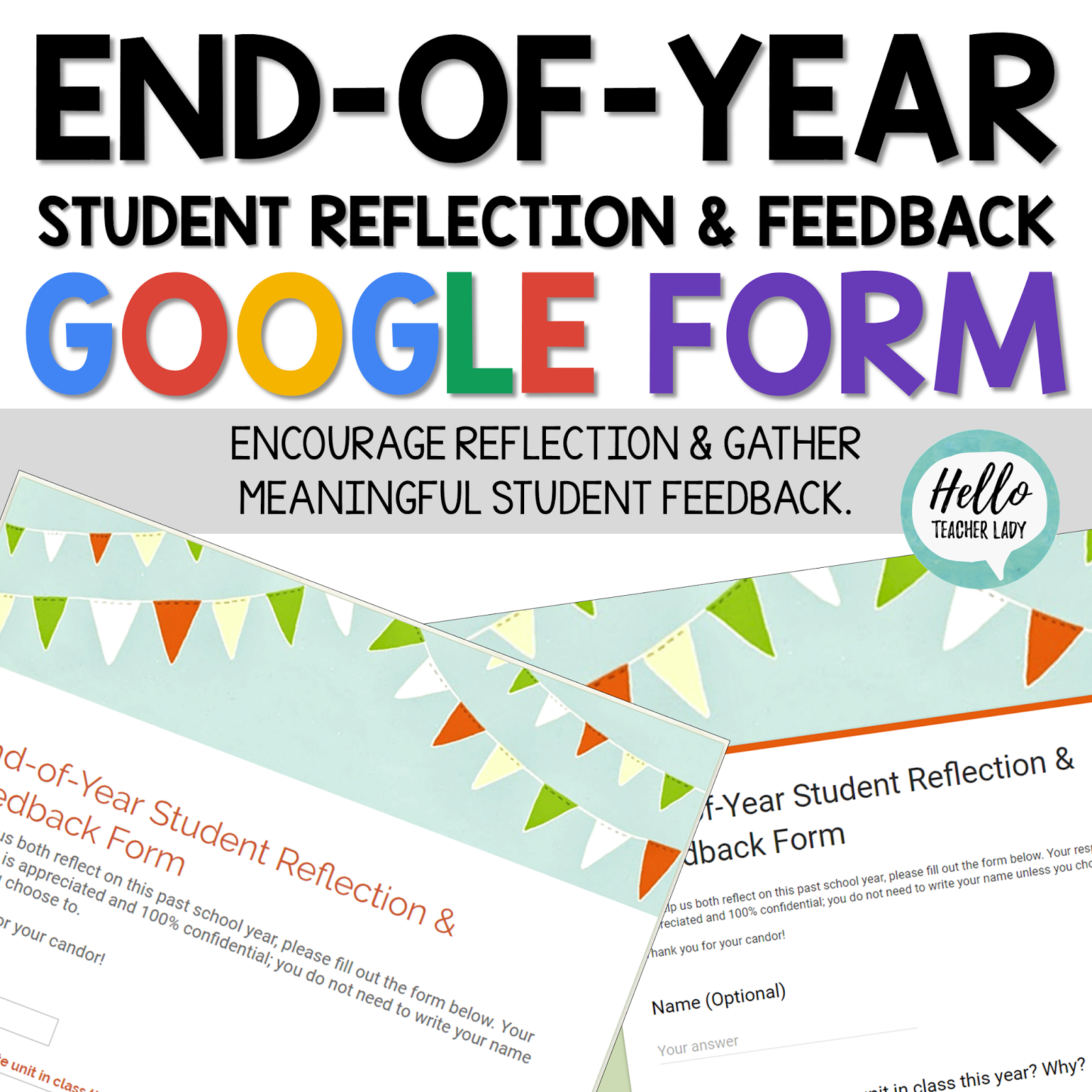
2.  Shana from Hello, Teacher Lady says that no school year is complete without a little reflection! This End-of-Year Student Reflection & Feedback Google Form encourages students to reflect on their year while providing teachers with valuable student feedback and insight. The responses are automatically stored in a Google Sheet for easy viewing from any device, so no need to worry about collecting paper or wonder where you're going to store all those paper stacks.

Shana says, "I love using this digital form with my students not only because of its ease and convenience, but also because the thoughtful responses have helped me reflect on my year and improve my own teaching for the following year. (Psst - you can download the form for free in my Teachers Pay Teachers store!)"

2.  Lisa shares Mrs. Spangler in the Middle's top 3 ways to finish the year strong! There's an inspirational video, a positive reinforcement system that culminates on the last day of school and even a daily motivator for those tough classes.


4.  Lit with Lyns recommends this Digital End of Year Student Reflection as a great way to give students the opportunity to reflect on their year. It also allows them to provide feedback on what they thought worked well, as well as what they would like to change in specific classes.

"Not only did this help my students to reflect," Lyns says, "it also allowed me to do the same. After reading their suggestions, in addition to what they liked, I was able to implement some of their ideas into different activities and strategies I used the following year. This resource is truly a WIN-WIN for both students AND teachers!!!"  It comes in both digital AND printable format!


5.  Marypat from Just Add Students recommends having your students create a Reading Legacy Project.  This is a fun way for students to reflect on all the great reading they’ve done through the school year.  Students create a resource for next year’s class that includes book reviews, scrapbook pages, “best of…” awards, and signature pages for notes of encouragement to the upcoming class.  Great resource for next year when your students ask, “What should I read?”


Give one of these ideas a try and let us know what you think... or offer an idea of your own that makes the end of the school year a breeze!

Friday, May 27, 2016

Super Hero Week

I feel that people always have some preconceived notion about middle school. They are smelly. They are rude. And they are too old for themed units. While the first two may be true occasionally, I have found that my students LOVE themed units when they are used as a treat and break from the normal routine.


Last year, around winter break, my 8th graders asked me if we could do some fun stuff like watch some Marvel movies. I told them that we would only get to do superhero stuff if it was in conjunction with some math lessons. I truly did not expect the positive reaction I received from the students!! Them immediately began thinking of ideas and ways that math could tie into superheroes. They practically planned out the entire Super Hero Week with me just finalizing their plans! And that is how our 1st annual Super Hero Week was born.


The students loved the 2014-2015 Super Hero Week so much that they began planning this year's Super Hero Week as soon as the last finished. We held this year's Super Hero Week last week as a break since we finished our state assessments the week before. It was a huge success again this year and will become an annual staple in my classroom from now on.


To prepare for Super Hero Week, we went up to the school on Sunday to decorate. My darling husband assisted with the decorating since he is almost a foot taller than I am. He is a trooper!! We had everything ready to go for Monday morning so that it was a surprise for my students.

These signs are in my hallway leading up to my room. "The fate of...the world...RESTS..."


"In your hands."


A peek into my classroom...


On Monday, we did a lesson involving the Flash. I wish that I had done better at taking pictures of the students doing the lessons. We went outside and clocked each student running a marked distance on the sidewalk. When we filled up our time boxes, we went back inside and calculated the mean, median, mode, and range of their times.


On Tuesday, we did a Wonder Woman logic puzzle. I used the summer logic puzzle created by Lindsay Perro found here. It was tough for my resource students to figure out, but I ended up with one student diving the puzzle by the end of the day. However, they all enjoyed getting to think outside of the box and do something different. 

On Wednesday, we used Batman as our theme. The students had a Batman bouncy ball that they had to bounce and hit targets with. Each student got to bounce twice. We kept record of how many targets they hit with their two bounces. Once all of the boxes were filled, we went back to the classroom and calculated our percent of accuracy. Using that percentage, they then had to figure out how many time Batman expects to hit his target if he threw it 150 times.

My darling husband made these awesome Batman targets for us to use.


 Every student got a chance to bounce the ball towards the targets.

The students on the side were in charge of catching the balls so they would not bounce down the hallway.


Even my principal got in on the action!!

On Thursday, we deviated from the superhero idea a bit and used the Joker as our theme. Each student had a whiteboard to complete the math problems on. If you got the answer correct, you stepped a pace forward. If the Joker caught up to you because you got too many wrong, then you were out. If you beat the Joker to the bat cave, then you were safe. Those that made it to the bat cave in time got to have a reward at the end of the day.


On Friday, we made Aquaman baggie ice cream. The kids were enjoying themselves so much that I forgot to take pictures. The students has to measure out all of the ingredients after calculating how much we would need from the original recipe. From there, we took the ice cream outside in baggies to shake. When the ice cream was ready, we poured into ciups and I let the student pick out toppings to put on.

This was his favorite phrase this school year in math.

If you are unsure of what to do in you classroom after state assessments, think about doing a themed week. It is a lot of work and prep, but the students truly enjoy it. It is such a nice break for them after the weeks of stress they have been through right before that. It also ensures students are on their best behavior because they are not allowed to participate in ice cream on Friday if they misbehaved anytime in my room that week. 

What are some things you implement in your own classroom after state assessments?


Wednesday, May 25, 2016

Make the Days Count!


We're counting down to the last day of school, but how about we make the days count instead?

We're all counting down the days until summer break, but what about making the days count?  When I asked my students what that might mean, they said making the days worth it.  So then I asked what would you suggest?
This is what they came up with:


I asked the students how we could make our last days of school count!  This is what they came up with...

I asked the students how we could make our last days of school count!  This is what they came up with...
I thought many of these ideas were spectacular!  So as soon as our tests are done, I'm going to make 
the days count with THEIR ideas!  

I envision a great service project where we can combine several of the ideas listed above.  How can we help kids this summer?  Perhaps we can spread the word about the free summer programs and free lunch program in our area by making some posters.  And maybe we can make them outside using some poster paint.  

Whatever we do, we'll be filling our days with things that matter and hopefully that will make all the difference!

Thanks for stopping by!


Tuesday, May 10, 2016

Year-end Self Assessments

Assess much?!  

Of course you do!  Formative, summative, state testing, completing student progress folders...by this time of year, you are probably feeling rather "assessed out."

However, there is one more assessment you that will provide you with a wealth of information about yourself, your students, and how you can improve your teaching:  self-assessments.

We assess our students, the state or another standardized test assesses our students, but what about allowing them to assess themselves?  Middle school students (as we are so keenly aware) have opinions!  And they appreciate the opportunity to express them.  When you provide your students with a chance to step back and honestly look at what they've accomplished this year, they will discover that they actually did learn something this year!


Looking Back

I set aside a class period to allow students to reflect on what they've accomplished this year.  Begin with a class brainstorming session.  What were the big concepts they learned?  What writing assignments or projects did they complete?  What goals did students work toward?  What special skills did they focus on this year?  What new technology did they learn or use?  What review games or activities did you use?  Encourage students to refer to their planners to jog their memories -- and create a big list on your board.  (It is helpful if you create your own list ahead of time to help them remember!)

If your students kept portfolios or journals, give them time to look through their work.  One year, I had a student hold up a paper that she'd written at the beginning of the year and exclaim, "I can't believe I wrote that!"  She could see that her writing skills had improved!

Once you have your list and students have looked through journals or portfolios, provide them with a list of questions.  You can use the questions I've created in my free year-end resource, or you can create your own list.  I wanted my questions to be positive, so I stayed away from questions like "What did you like the least?" (Why are those the questions that are always so easy to answer?!)


Why This Works

1.  Students respond really well to this.  You think you might get some unkind comments since it's anonymous, but students appreciate the opportunity to give you an opinion.  This is especially nice for the quiet students who may never complain or compliment. This is a way for all students to speak their minds. 

2.  Students can stop and look at how they've grown.  This little activity provides a wealth of self-confidence -- like my student who couldn't believe the difference between her writing at the beginning and end of the year.

3.  This helps me plan for the next year.  We can usually tell when an assignment is a bomb or the students really hate something, but we often don't know what they enjoyed.  

4.  The list you will create during the brainstorming session alone will give you a tremendous boost.  Take a picture of it and send it home to parents in a year-end email!  Your students worked hard this year! Share that picture with your administrators as well, and save it to share for next year's "meet the teacher" night!  

What's Next?

You probably have done your own self-evaluations in preparation of teacher evaluations with your administrator.  Consider completing your own year end self-assessment that is for your eyes only.  You can use the one I have in my free year-end resource if you like, or just take out a sheet of paper and write down what went well this year and what you'd like to change next year.  


Tuck that self-eval in your desk or planning book -- or somewhere else you'll find next fall when you return to your classroom.  It's like sending a message to your future self!!

Plato said, "An unexamined life is not worth living."  And certainly, both students and educators will benefit by taking time to examine what we've done, how we've grown, and where we can improve.   

Enjoy the last few weeks of school, and don't forget to learn from this year!

Happiness always♥


Thursday, March 31, 2016

What To Do After Testing

It is so hard to believe that testing season is officially here. In Texas, 8th grade is considered and SSI year. What is SSI? It means Student Success Initiative and translate into crazy amounts of testing. The 8th graders, if they failed their state assessment, get to have mandatory remedial tutoring and retake the test again in May. If they fail again, they go to summer school and take the test again in June. This all occurs because they must pass the test in order to advance to high school.

So, yeah. Here we are in March and my 8th graders just took their math state assessment on Tuesday. Buuuutttt...what do I do with the other 11 weeks of school???


Since I am not only math but also special education, I fill in this time with a combination of things:
  1. I focus on personal financial literacy for my students. Not only are they state standards, but I will do a lot of real-world practice such as learning to budget for an apartment or food. This is an area that ANY student needs to know before they graduate high school, and sadly, many of my students are definitely not being taught good skills at home.
  2. I will reteach areas that have been a weakness for my students this school year. As optimistic as I am, there is a good chance that at least a few of my students will not pass their state assessment and will have to take it again in May. By reteaching math skills, my students will not have a chance to forget everything they have learned this year and will get to have extra practice at mastering those skills before retaking their state assessment.
  3. I will teach some new skills that will prepare my students for Algebra I in high school. By pre-teaching some of the skills, my students will (hopefully) have a leg-up when high school comes around because they have seen some of the beginning Algebra I skills before. This will make the transition at the beginning of the school year easier for the teachers that will receive my students next year.
By doing a combination of all 3 of these, I am hoping I give my students the best possible advantage in all areas the last 11 weeks they are with me. However, I am always open to learn from the seasoned pros about better ways to utilize the time after state assessments.

If you have any ideas on how to best use time after state assessments, please leave a comment below so that other people can share in your knowledge.


Tuesday, March 29, 2016

BINGO Project Menu Boards


Hey all,

Tori here from An English Teacher's Journey Through the Middle, and I am going to discuss my favorite way to handle that dead period after testing.

Once state testing is over, the happy dance begins, but the looming question arises, “What do I do now?” Have no fear, project time is here. I don't mean projects just for the sake of keeping students busy and out of your hair (although that is an added bonus), but projects that provide student choice, that develop research and presentation skills, that blend creativity and productivity, and that fill those last few weeks with fun and learning.

I LOVE this time of year! Testing wraps up and I can finally start enjoying my students again. As an eighth grade teacher, this becomes a very special time because my lovelies will be heading off to high school in a few short weeks, and I want to ensure our last days together leave them with a plethora of fun memories. After dealing with the dead time after testing for 16 years, and many sets of projects that when remembered are tear-inducing recollections of stress, I have found Project Menu Boards to be the best way to fill in the after testing time.

I set up Project Menu Boards in the form of a BINGO card. The BINGO card allows for a tremendous amount of student choice, and therefore hooks students immediately. Students can complete a traditional BINGO row or column, make it simple and finish a row or column in a group, become super overachievers and bust out a project a day for the last four to six weeks, etc., the possibilities are endless.  The projects can be completed digitally or as a physical product. I also have students present at least one of their project choices to the class. This is a wonderful way to hold students accountable for completing a well-done project, exposes the rest of the class to some great information, and allows students to show off their creativity and hard work.

Hare are some pics of different BINGO Cards I have assigned to my students as well as a few completed projects:


Quotes and Explanation
Digital Timeline

Digital Memory Game


Head on over to my TpT store for a FREE BINGO card template that you can customize to suit the needs of your class! Enjoy your after testing time and please share some of your students’ amazing BINGO card projects!

Until next time,


Monday, March 28, 2016

3 Tips for a Fun Last Quarter of School

Hi all,

Marypat from Just Add Students here.  

Like Caitlin, I taught in a private school, so statewide tests weren't an issue; however, I think squirrely middle school students are universal! And the last quarter of the school year is always a challenge.

Here are three ways to smooth out your last quarter of school and actually have fun!

1.  Tap into the passion.  You know how each class has something they are passionate about?  One year, my students loved to play "Cherry Pie" (8th graders!  no kidding!).  Another year, I had students who wanted to have an art activity attached to every writing assignment.  Then, there was the year my students loved to put together news shows (we all knew these middle schoolers were an interesting group!).  

By this time in the school year, you know your class (sometimes too well!), and you know what projects they've enjoyed.  Create a meaningful small group project that will showcase what they love. 

Drama day was a huge hit with my students.  One year students were tasked with creating a dramatic performance of "The Jabberwocky."  We had everything from a musical rendition to a puppet show!

Don't forget to give them the opportunity to share their project with the rest of the school and parents.

2.  It's all fun and games...  A quick game can get students out of their chairs for a few minutes and recharged for whatever task is at hand.  Even my eighth graders loved a goofy games like "Four Corners" or charades (have charade cards that you've created of characters from books and stories you've read this year).  

One year I implemented Fun & Games Friday during the last quarter.  Students who had completed their work could participate in the game on Friday. This built in a reward for those who weren't motivated by grades (and by April, that was just about everyone!).  

You can choose a different game each week (Bingo, Scattergories, Scrabble), or hold a tournament.  I chose the game since I wanted it to be somewhat educational!

A favorite was an annual Scrabble tournament the last few days of school.  This became an 8th grade tradition -- even former students would come back to help at the end of the year! 

To get students ready for the tournament, we played quick games on Fridays; this way students could learn the rules and strategies before the tournament.  Students played with a partner and only two teams were at each board.  That way the game moved quickly.  Using a timer, an official dictionary, and  the real rules are also critical!

No matter what game you choose, a successful game day means you'll need to be organized and have enough of the same game for everyone to play.  Bored kids can ruin the experience!

The key to playing games is to stop while the students are still having fun!  You want this to be a reward they look forward to.

3.  Sample size. I always loved to try something new the last quarter of the school year.  It was a great way to test something out to see if I wanted to add it the next year.  If  I'd heard or read about something and wondered if it would work in my classroom, I tried it in the last part of the school year.  

Introduce your students to something fun and creative like Storybird or have them create podcasts of themselves reading books for younger students. Just make sure you don't try out too many new things at a time since that can confuse your students.

By stirring up what is happening in your classroom at the end of the year, you'll keep your students guessing and interested...and it will be fun for you as well!

Happiness always,