Bloglovin' Facebook Pinterest E-Mail Instagram Shop Home About Us Freebies Shop Image Map
Showing posts with label middle school class. Show all posts

Sunday, April 23, 2017

Five Ways to Create a Strong Finish for the School Year

As the school year draws to a close, we’re all looking for fun ways to keep our middle school students engaged and learning– right up to the last day!


The Middle School Mob has come up with a list of five activities that are sure to help you make the most of these last weeks…and keep you sane at the same time! 

1.  Sharon from Classroom in the Middle uses Summer Practice Cards.  Summer Practice Task Cards are designed to provide a review of language arts skills for middle schoolers or students in upper elementary grades. The 30 half-page cards include five each on six summer topics: At the Beach, Life on the Pond, Low-Tech Fun, The Ball Game, Picnic Time, and Vacation and are perfect to use with a fun classroom game or activity. A coloring page cover and a checklist of assignments completed are also included so that the cards can be sent home for a summer practice booklet.


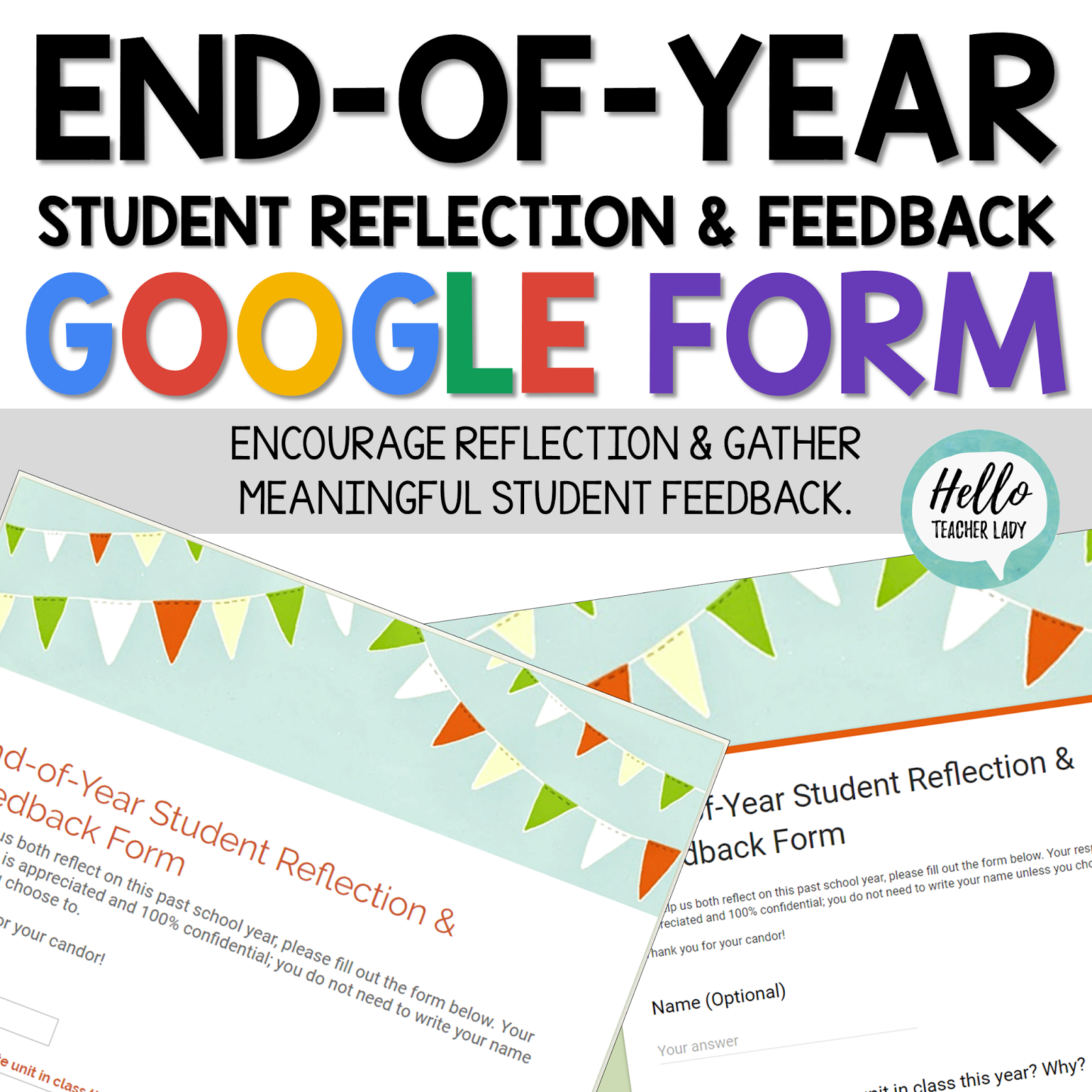
2.  Shana from Hello, Teacher Lady says that no school year is complete without a little reflection! This End-of-Year Student Reflection & Feedback Google Form encourages students to reflect on their year while providing teachers with valuable student feedback and insight. The responses are automatically stored in a Google Sheet for easy viewing from any device, so no need to worry about collecting paper or wonder where you're going to store all those paper stacks.

Shana says, "I love using this digital form with my students not only because of its ease and convenience, but also because the thoughtful responses have helped me reflect on my year and improve my own teaching for the following year. (Psst - you can download the form for free in my Teachers Pay Teachers store!)"

2.  Lisa shares Mrs. Spangler in the Middle's top 3 ways to finish the year strong! There's an inspirational video, a positive reinforcement system that culminates on the last day of school and even a daily motivator for those tough classes.


4.  Lit with Lyns recommends this Digital End of Year Student Reflection as a great way to give students the opportunity to reflect on their year. It also allows them to provide feedback on what they thought worked well, as well as what they would like to change in specific classes.

"Not only did this help my students to reflect," Lyns says, "it also allowed me to do the same. After reading their suggestions, in addition to what they liked, I was able to implement some of their ideas into different activities and strategies I used the following year. This resource is truly a WIN-WIN for both students AND teachers!!!"  It comes in both digital AND printable format!


5.  Marypat from Just Add Students recommends having your students create a Reading Legacy Project.  This is a fun way for students to reflect on all the great reading they’ve done through the school year.  Students create a resource for next year’s class that includes book reviews, scrapbook pages, “best of…” awards, and signature pages for notes of encouragement to the upcoming class.  Great resource for next year when your students ask, “What should I read?”


Give one of these ideas a try and let us know what you think... or offer an idea of your own that makes the end of the school year a breeze!

Wednesday, August 24, 2016

Flexible Seating in Middle School


Hi everyone, its Julia from History from the Middle and I'm going to share with you how I do Flexible Seating in my class--YES, my middle school class!  It works!!  I'm going to share with you how I have set up my class, how I share it with my students, and some images of what it looks like in my class!

I start with flexible seating on day 1...Which was actually today!  I first label each of my seats with a table number and a seat number.  I print these out on sticker sheets and place on each desk and then I also print the seat labels on paper to make "seat cards".  These are what I actually use to randomly assign seats at the beginning of the year.


So, on day 1, I lined my students up outside my class, briefly explained that our class has flexible seating, and we would discuss what that is over the next few days, but that today they would just be randomly assigned a seat.  I started with my floor seats first and asked who wanted to sit there, and then randomly handed out the other cards for my other seats.

I have the following options in my class:  Floor seating with stadium seats and an Ikea Coffee Table, 3 low tables with Ikea Stools, 1 lower table with crate seats, multiple desks and chair and then 1 table with Ikea Rolling Chairs.  I am planning on upgrading one of my stool tables with the ALL popular Kore Wobble Stools!  They are a bit pricey, but I think my students will really enjoy having them as one of our choices!  All are part of my flexible seating with the exception of my table with my Ikea Rolling Chairs I'm using as a VIP table this year!  Here is an interesting blog post on VIP Tables!


Ikea Coffee Table with Stadium Seating (I store the seats on the shelf under the table)

Low tables with Ikea stools

Low table with crate seats


Regular desks and chairs


Table with Ikea Rolling Chairs (VIP Table)

I also have two areas in the back of my room that I open up for independent activity time.  One area is my classroom library with 4 bean bags (that I got for a GREAT deal from Craigslist!), the other is an area with some more crate seats and 2 small Ikea Tables.  

Library area with bean bags

Crate seat area with Ikea Side Tables

After day 1 of introducing, I then go into the details of how Flexible Seating will work in our class.  Click HERE to see my Power Point on Flexible Seating that I share with my students!  On the last page of the presentation, I have hyperlinked for your a Google Forms survey that I created to survey the kids on what seating style they like best!  Feel free to copy to your Google Drive and us!  Also, if you're looking for some pre made rules and posters, check these out from Buckeye Teacher!

 Each day, I switch up the seating cards before they come in so they have the opportunity to sit in a different seat.  Once I feel they are comfortable with the seats AND knowledgeable of my rules and expectations with the seats, I then allow them to freely choose.  I initially have them choose a Home Seat which will then be written on a seating chart.  They know that when there is a sub, they will sit in that Home Seat so the sub is able to follow with a seating charts.  

When I first entered the "unchartered waters" of Flexible Seating, I was worried about it not working and not being able to manage it.  I can tell you through reading many other blog posts and just seeing what worked in my own class with my students, I've seen great success!  In fact, it is has now spread to several other classrooms at my school! 

I'd love to hear from other teachers that have either tried ir or are thinking about trying it...Please share below!


Tuesday, August 23, 2016

How I Get My Ducks In A Row With Classroom Routines!


Routines create a pattern that students can count on so they knew what to expect which helps to create stability and a positive classroom environment.


Ok, I'll admit it.  I love routines.  Why?  I think it's because they create stability and order.  And when you teach Middle School, that can be hard to come by.  After all, many of the students are characterized as "hormones with feet" and with their changing bodies and changing perceptions, their sense of security is definitely diminished.

So here is an opportunity for me to create a space where calm amidst the chaos can prevail.  Take, for example, my specific entering routine:

1.  I greet students at the door.
2.  Students pick up their materials.
3.  The bell rings and I play an inspiring song in the background.
4.  Students write in their planners and then begin the bell work.  (I take attendance.)
5.  I come around and initial planners and answer questions.
6.  The song ends and I announce that there are X number of minutes to complete the bell work.
7.  I come to the front of the room and welcome everyone.  Then we review the learning target and homework due date.
8.  Now we go over the bell ringer.


Believe it or not, this entire procedure takes only about 8 - 10 minutes once we get into the routine.  But you can see that for me, bell ringers are a necessary part of getting everyone in and settled.

I generally use bell ringers as an opportunity to review and practice.  If you use bell work for this too, then you might be interested in these Middle School Mentor Sentences that are all ready to go and focused on perseverance using an original text about Walt Disney.

Here's a Month of perseverance themed bellringers all based on an original non-fiction text about Walt Disney. Supporting growth mindset, the topic of perseverance is perfect for the beginning of the year!
This is 28% off today if you use code OneDay!

It takes several days to completely teach a routine like this, but I think Bell Ringers are essential to creating a classroom community.  Why?  They become part of a routine that satisfies a need for safety that comes from order.  

So, how do I do this?
A little bit at a time.
Last week, I modeled coming into the room with my own book bag and materials.  I actually pretended to be a student and even sat at a student desk.  The kids chuckled, but instead of me just explaining it, I showed it to them.  Then, the students practiced.  
They practiced the routine, you ask?  Yes!  This is how we all learn, right?  This applies to routines too!  After we have the coming in part down, then we add in planners.  Once the students can come in and write in their planners, then we add in the bell work.  One step at a time - I think I can, I think I can.  :)

Now here's my full disclosure:  I've been doing this for 22 years.  So I know how this will turn out.  Entering the class using this routine will become a habit.  So much so that when there is a new student, they confidently show it to that student - or an administrator - or anyone who asks.  They are confident because they know they can depend on it.  And in a world where change is the norm, it's nice to have a little bit of predictability in one's life.

Do you have routines in your classroom?  Join in the conversation in the comments below!